Designing Metica (part 1) – The MVP, an in-app offers optimisation platform
Shipped in
2023
My role
Product design
Team
Me + 1 FE, 1 ML, 3 BE engineers
In 2022, most studios managing in-app offers were doing it in Excel. Metica's first product set out to fix that: a full platform for composing, scheduling, and optimising offers at scale, with contextual bandits built in as the experimentation engine.
The impact
Shipped to 2 paying B2B customers in under 6 months
Full offer lifecycle management: audience, scheduling, creative, limits, holdout, and experimentation in one platform
Validated contextual bandits as the core intelligence layer carried forward into subsequent products
The problem with a spreadsheet at scale
Studios weren't short of offers. They were short of control. Offer pools would balloon into hundreds of thousands of variants with no live view of what was active, what was performing, or what was conflicting. The tools holding it together were brittle and entirely manual.
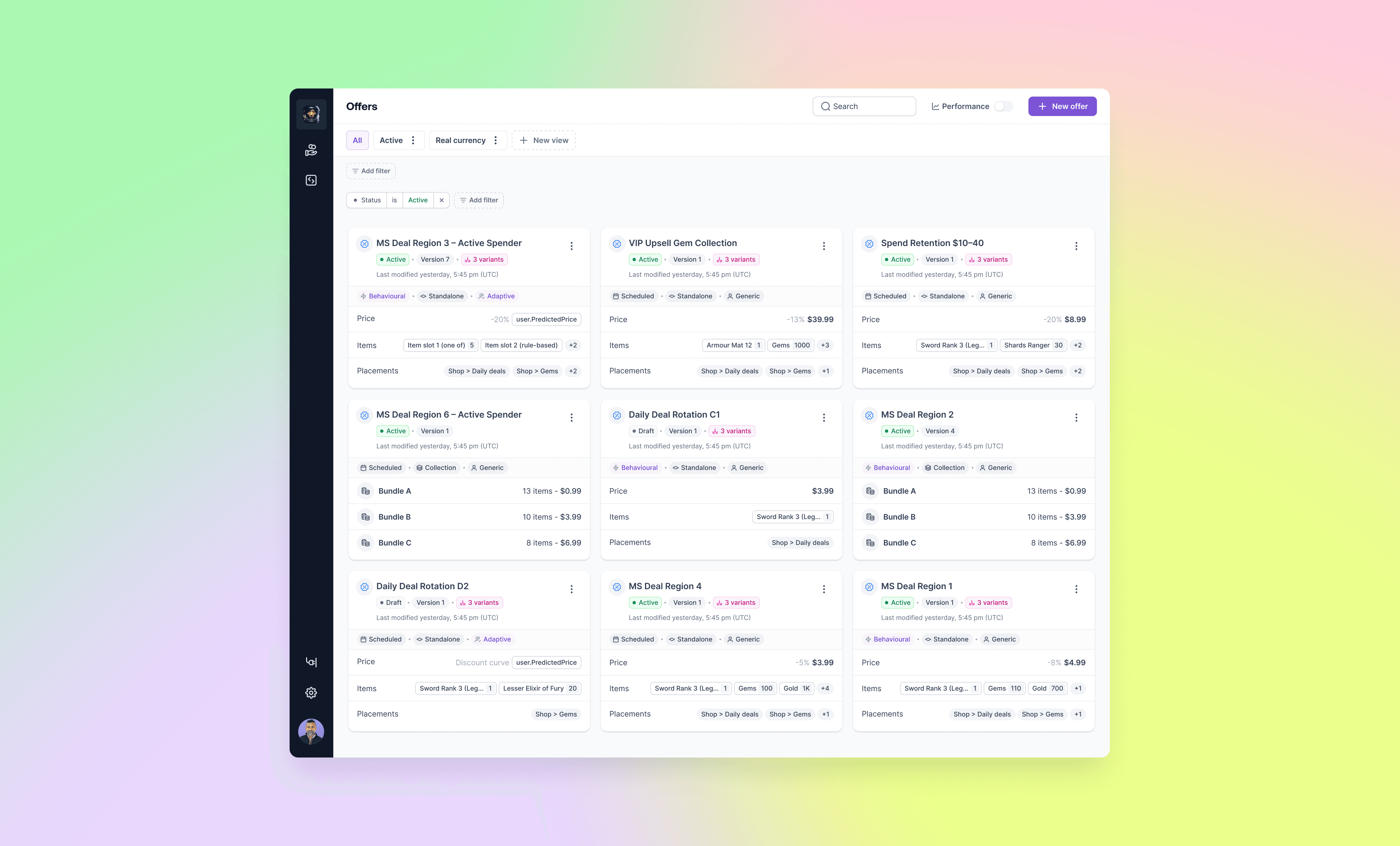
The last shipped iteration of the Offers page
The contradiction we couldn't get past
We were selling uplift, which meant we were selling to studios that already ran offers. Those studios already had an offer model, with their own field names, their own structure, their own assumptions about what an offer is. To use Metica, they had to adopt ours.
The conversation kept hitting the same wall. A studio would ask whether we supported a specific field they relied on, and too often the honest answer was to point them at a custom JSON payload. Nobody wanted to rebuild their entire offers implementation just to run a test. The product that promised better performance asked for a heavy rewrite before it could prove anything.
The audience builder UI. A pre-AI interface to simplify complex boolean logic expressions.
What it led to
18 months, two customers, and one clear lesson. The intelligence held up. The contextual bandits worked. What didn't work was forcing studios onto our model of the world before they'd seen a single result.
The next product inverted that. Instead of asking studios to adopt our data model, we'd accept theirs, whatever it was, and let the bandits prove their worth on a single config before anyone committed to moving everything across.
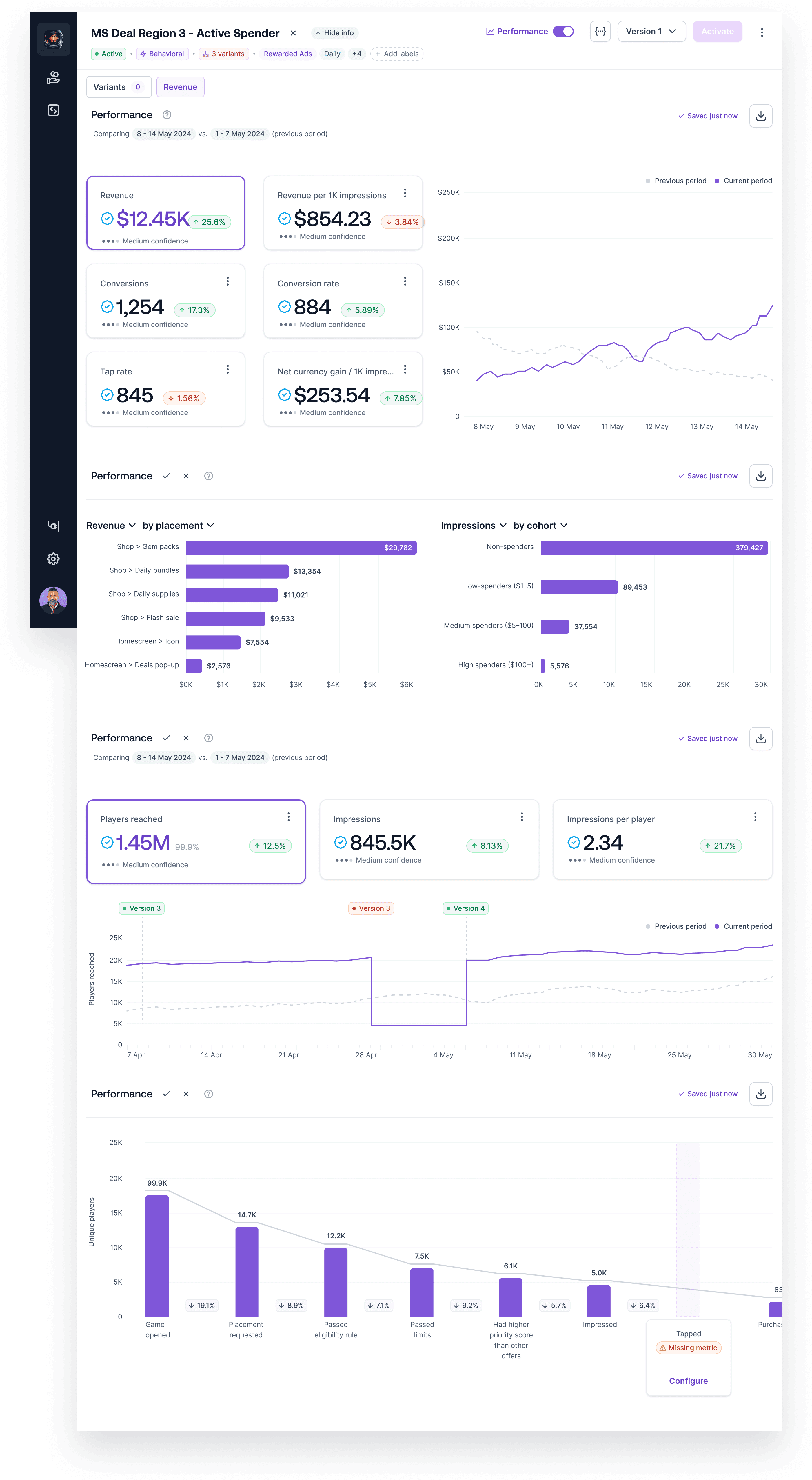
Above: the shipped Performance page of an offer that includes experimentation (Contextual bandits)