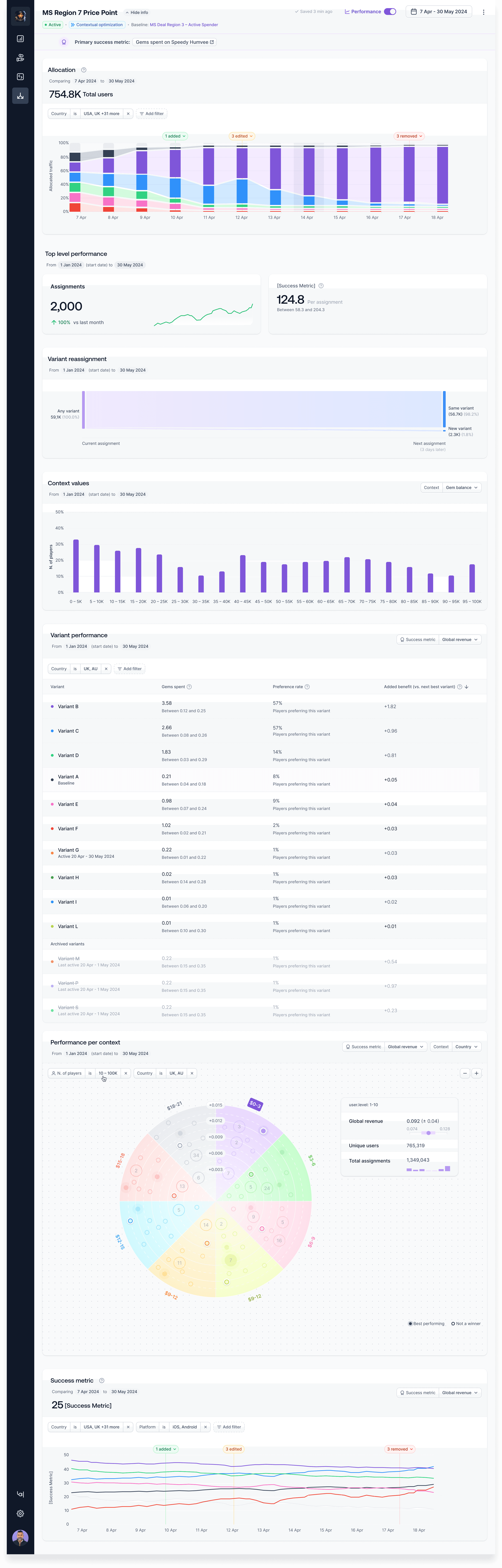
Designing Metica (part 2) – First pivot, a remote config tool with AI experimentation
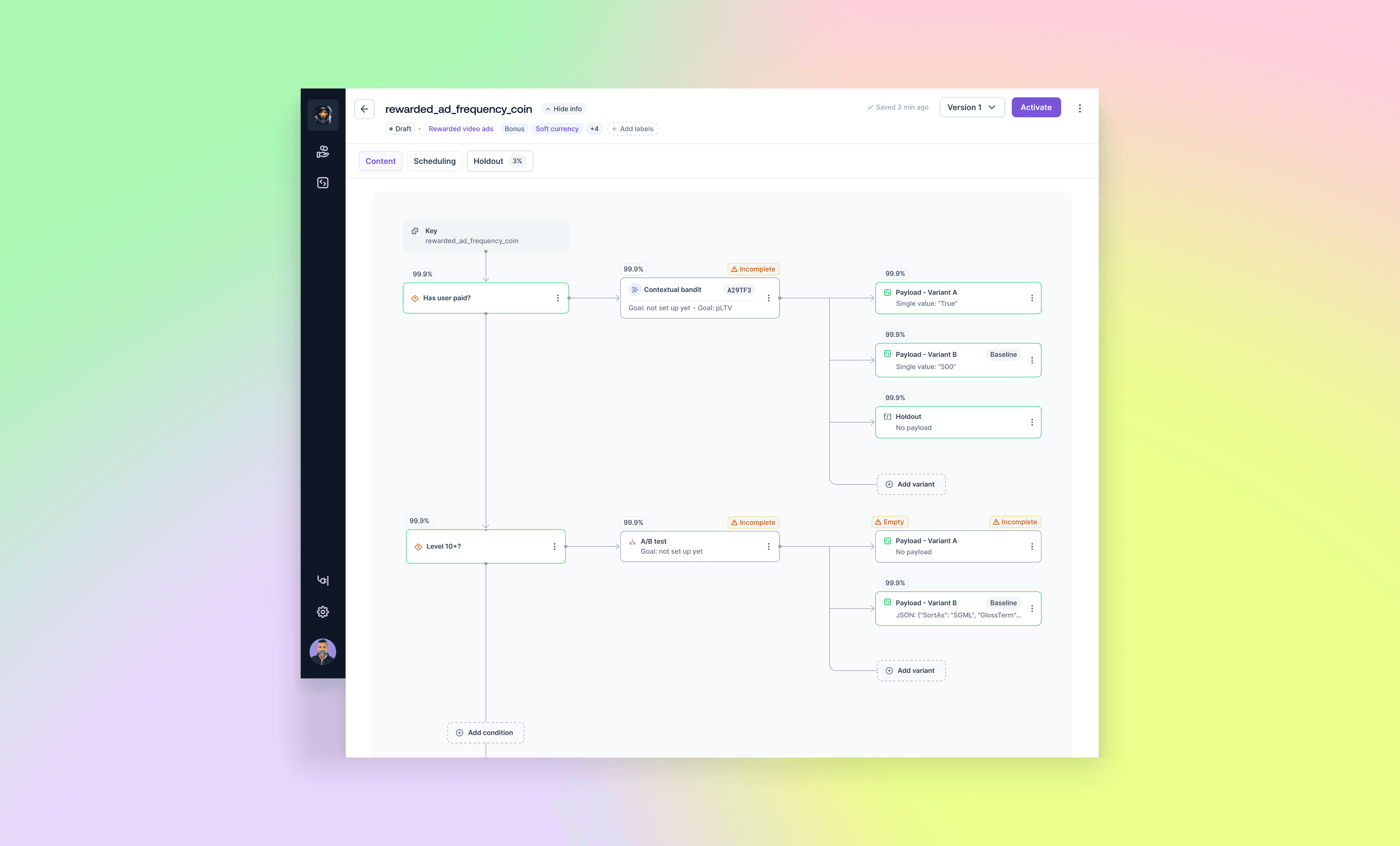
Shipped in
2023 – 2025
My role
Product design
Team
Myself + Product Manager + CTO + 1 FE engineer + 2 BE engineers
The offers product asked studios to adopt Metica's model of what an offer is before they'd seen any result. SmartConfigs removed that demand entirely. The data model became whatever the studio wanted it to be, and Metica enforced nothing. Studios could attach any config, point the contextual bandits at a single value, and see whether the uplift was real before committing to move anything else across. Remote config was the wrapper. Low-risk experimentation was the actual sell.
The impact
Shipped to ~12 B2B customers. Core selling product for year 2 & 3
Reduced integration effort by ~2 weeks vs. the original MVP (offers)
Extended contextual bandit experimentation to any remote-config value, not just offers
Making integration something a studio would actually agree to
The first product asked too much of a studio's engineering team. So before anything else, we cut the integration effort down. Less backend lift, less time from a developer's first look to a working connection. The product that followed only made sense if getting in was easy.
Remote config that people could actually use
Studios change live games without App Store updates using tools like Firebase, or, still, spreadsheets. When we tested with users, the verdict on the existing options was blunt: technical, clunky, hard to use. SmartConfigs covered the same ground with an interface built for the people doing the work, not just the engineers.
The data model is whatever you want it to be
The offers product failed on a contradiction: we sold to studios that already ran offers, then asked them to rebuild their offers on our terms to try us. SmartConfigs resolved it by enforcing nothing. Whatever structure a studio used, Metica accepted it.
That changed the size of the first commitment. A studio didn't have to migrate anything. They could wrap a single config, run the bandit on it, and judge the result against their own numbers. If it was worth more, moving the rest over became their decision, made on evidence rather than a sales promise.
Offers stayed, but the product opened up
Offers were still an important part of our product offer. The difference was that remote config let studios change almost anything: attach a JSON file to alter gameplay, swap content, adjust whatever they wanted live. The product stopped assuming offers were the only thing worth changing.
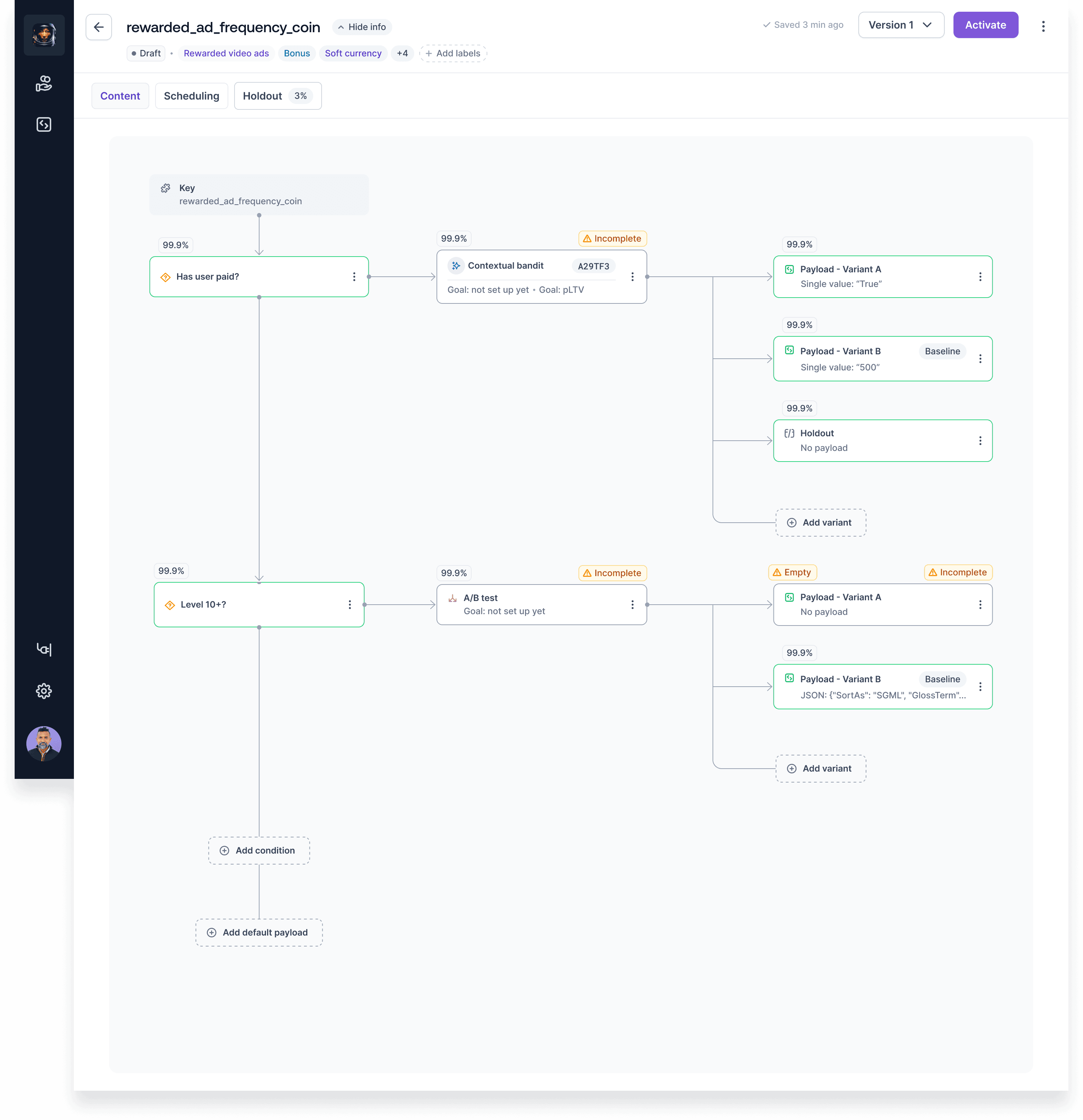
Above: the visual workflow-like canvas to compose a SmartConfigs with experimentation.
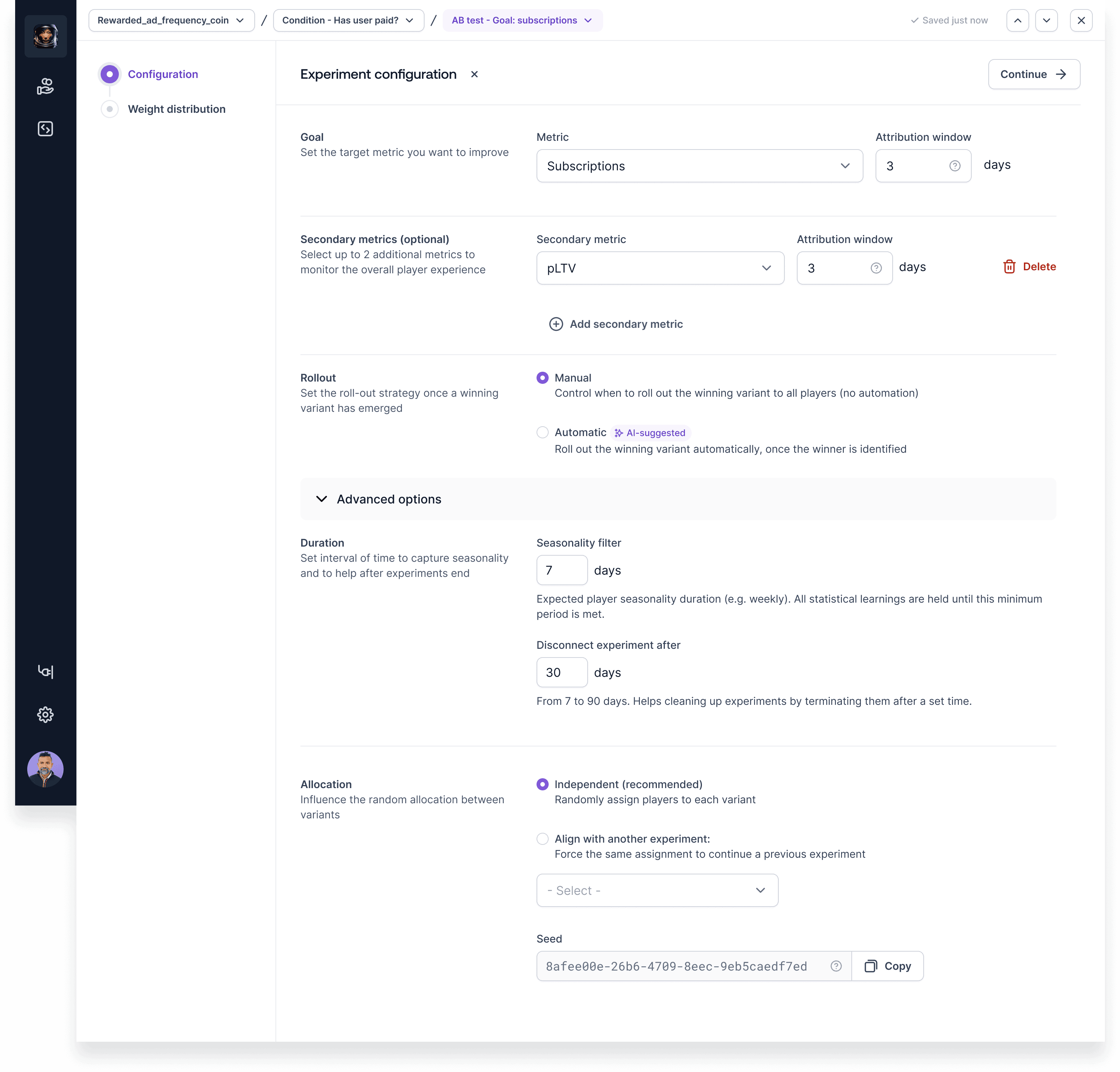
Above: the interface to configure parameters for the experiment.
Experimentation on anything, not just offers
The contextual bandits attached to SmartConfigs. Studios could run sophisticated, always-adaptive experiments on a dozen offers at once, or on two or three versions of a gameplay JSON, and let the algorithm find the winners over time. We gave them the experimentation engine and the flexibility to point it at anything, rather than telling them what to test.